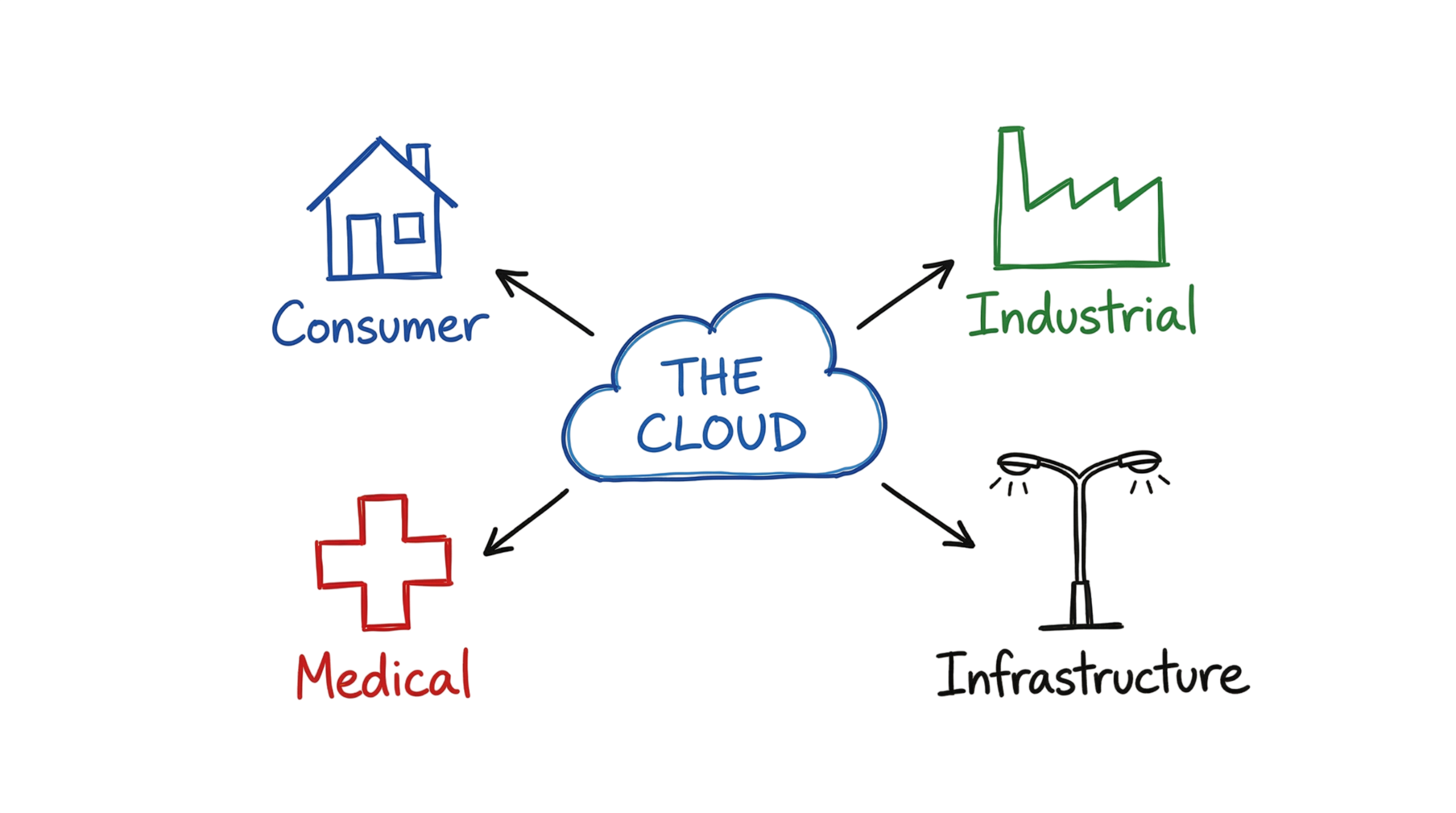
Are you familiar with your home router’s device list? If you have been around in the last couple of years, you will see that there are plenty of things within your home which communicate through the internet. Estimates show that 40 billion connected objects will be in existence across the globe by 2033. This forms the basis of the IoT universe, whose management begins with the understanding of the various categories. In this guide, you are going to learn more about the workings of these smart gadgets and their impact on everyday life.
What Are Types of IoT Devices?
IoT devices are objects which communicate via the internet to provide data to others. However, this does not refer to the simple use of your computer or mobile phone. The objects vary in nature and may be from an IoT-enabled light bulb to large machinery used in industries. An IoT device simply refers to an object with sensors, software, and networking chips.
This is what usually causes misunderstanding to most people. Most people believe that it refers to either the hardware or the device. But the truth lies in the data. Data gathered from the IoT devices comes to our attention through the clouds.
How Do These Devices Work?
Every IoT device follows a simple four-step process to function. Here is the breakdown:
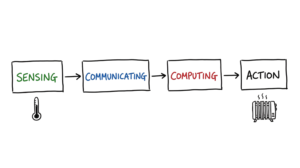
- Sensing: The sensor gathers information through intelligent sensors. These may be environmental, such as temperature, physical, like movement, or even chemical, such as pollution levels.
- Communicating: The sensor transmits the information over a network. This may be via Wi-Fi, Bluetooth, or even cellular communication, including 5G.
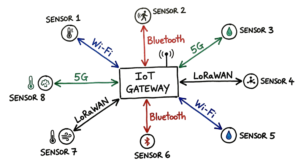
- Computing: Information is analyzed by a computer or edge computer. This typically occurs on a cloud server or an IoT gateway.
- Action: The information leads to action. For instance, an automatic heater activates if the environment becomes too cold.
The 5 Main Categories of IoT Devices
To understand the field, we can group these devices into five major categories. Each group serves a different environment and has unique requirements.
1. Consumer IoT (CIoT)
Consumer IoT concerns itself with making your life more convenient. These are the devices that are most likely visible at stores, including the products you may see daily. Most of them use Wi-Fi or Bluetooth connectivity and emphasize convenience.
- Smart Thermostats: These automatically adjust based on your habits to reduce energy consumption.
- Fitness Wearable Devices: These track your heart rate and sleep habits.
- Smart Appliances: Refrigerators that will inform you when your milk is about to expire.
2. Commercial IoT
These commercial devices assist companies in maintaining efficiency within their operations. Such devices can be found in shops, office buildings, or even hotels. They enable asset management and enhance customer experience.
- Inventory Tags: Little labels that indicate the exact location of the item in the warehouse to the manager.
- Lighting Automation: The system in office buildings dims the lights when there is nobody inside the room.
- Dynamic Signs: Digital displays that change their content depending on the time of day.
3. Industrial IoT (IIoT)
Industrial IoT is where the hardware gets heavy-duty. These devices monitor complex machinery and factory floors. They must be very durable and reliable.
In real environments, it doesn’t work this cleanly. I once worked on a site where massive motors created so much electrical noise that the sensors would lose their connection every time a machine started up. We had to rethink the entire gateway placement.
- Vibration Sensors: This device senses small vibrations from the motor movement to forecast any impending fault.
- Flow Meters: This device monitors the flow of chemicals or water in pipes and quickly identifies any leakage.
- IoT Gateway: This serves as an intermediary that gathers information from multiple sensors used in the factory.
4. Infrastructure IoT
This classification oversees the infrastructure responsible for keeping cities functioning. This includes technology used in Smart Cities that enhance safety and help with resource management.
- Smart Traffic Lights: Camera/sensors which adapt lighting based on actual traffic volume.
- Structural Sensors: Placed on bridges/tunnels to detect any cracks/movements.
- Waste Management Sensors: Sensors in the garbage bins indicating when bins are full.
5. Internet of Medical Things (IoMT)
The Internet of Medical Things is one of the most rapidly evolving areas that is saving people’s lives. The following devices will enable doctors to track patients remotely and deliver individualized treatment.
However, there is more to it. Using all this information, doctors will be able to spot any problems with hearts or glucose levels even before patients experience symptoms.
- Smart Implants: Orthopedic implants tracking joint activity after surgery.
- Remote Heart Monitors: Devices sending EKG data straight to cardiologists.
- Connected Insulin Pumps: Pumps adjusting insulin release depending on glucose sensors on patients.
Real-World Example: Smart Irrigation
IoT technology finds extensive use in agriculture. The modern farm employs an intelligent irrigation system, which helps in conserving water and costs involved. This system employs smart sensors, which are planted within the soil to determine its level of moisture.
The system uses water to irrigate the crop when there is no moisture within the soil. It helps to save up to 50% of the water in some locations. Additionally, it eliminates the risk of overwatering, which keeps the crops healthy.
Real-World Scenario: The Factory Floor
Suppose you are an engineer working at a plant where there is massive manufacturing taking place. Suddenly, your dashboard alerts you that there is a ‘High vibration’ warning on the cooling pump of your factory. You are able to catch the warning since you already have industrial IOT sensors installed. As a result, you can get your repair done during lunch break without shutting down your factory, which would have cost your company hundreds of thousands of dollars otherwise.
Common Risks and Challenges
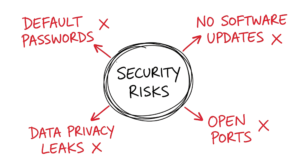
However, such devices have specific problems you should be aware of. It was quite common for us to encounter security as an afterthought in such cases. We had clients using Palo Alto NGFWs along with Zscaler ZIA, but their configuration of the split-tunneling would send DNS requests to external networks and reveal the names of IoT devices to the world.
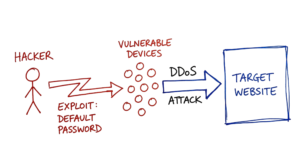
- Default passwords: Many low-cost devices have easy-to-guess passwords such as “1234.”
- No updates: Some of the manufactures do not update the software on the device to patch security vulnerabilities.
- Data Privacy: Such devices gather sensitive user data that may get disclosed if servers are hacked.
- Botnets: Hackers may use a large number of compromised devices to launch attacks on major websites, such as happened in the Mirai attack case.
How to Secure Your IoT Devices
The awareness about technology is not mandatory when you need to secure yourself. Below are some of the measures that I apply at home to be secure.
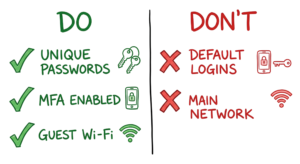
- Change Your Password: Ensure that each time you purchase new devices, change their passwords.
- Multi-Factor Authentication: Make sure you use MFA when using the application for your devices.
- Create a Guest Network: All devices will be on a different Wi-Fi from the one on which your laptop and smartphones run.
- Install Updates: Visit the app and confirm if the device needs any update.
- Restrict Some Features: Disable any feature that is not currently being used by you.
Tools and Technologies
If you want to build or manage your own IoT projects, here are the real tools the pros use:
| Tool Name | What It Does | Use Case |
| Raspberry Pi | A small, powerful computer | Acting as an IoT gateway or media hub |
| ESP32 | A low-cost microchip with Wi-Fi | Building small smart sensors for the home |
| Wireshark | Network analysis software | Checking if your device is sending data securely |
| Nordic nRF54L | An energy-efficient chip | Powering next-gen wearables and edge computing |
| Particle | An IoT hardware and software platform | Managing large fleets of connected devices |
Frequently Asked Questions (FAQs)
Q1: What kind of IoT devices are most prevalent?
A: There are various smart home IoT devices, among which smart speakers like Amazon Echo and smart light bulbs, are quite common.
Q2: Are these devices secure to use?
A: Yes, provided that they have been configured properly by their users. Otherwise, there may be cases where they become susceptible to hacking attacks.
Q3: Are these devices dependent on Wi-Fi?
A: Not necessarily. There are many other connection types such as Bluetooth or LoRaWAN and 5G depending on their purpose.
Q4: Explain the difference between IoT and IIoT devices?
A: There is not any difference apart from the context in which they are referred to since IIoT is an acronym for “Industrial Internet of Things.”
Q5: How much data do these devices generate?
A: That really depends on each device. While some devices such as a smart light bulb generate negligible amounts of data, others like smart security cameras generate terabytes.
Conclusion
There are different types of Internet of Things gadgets which have created paths towards a connected society. These gadgets collect data so that we can make more informed decisions. However, one should remember that while using such devices, we need to be equally careful about protecting our data. Remember to change your passwords and update your software applications regularly. With increasing edge computing and 5G networks, we are sure to see some more advanced gadgets in the coming years.
Reference: wikipedia
Read more IoT blogs at: IOT TechNaga