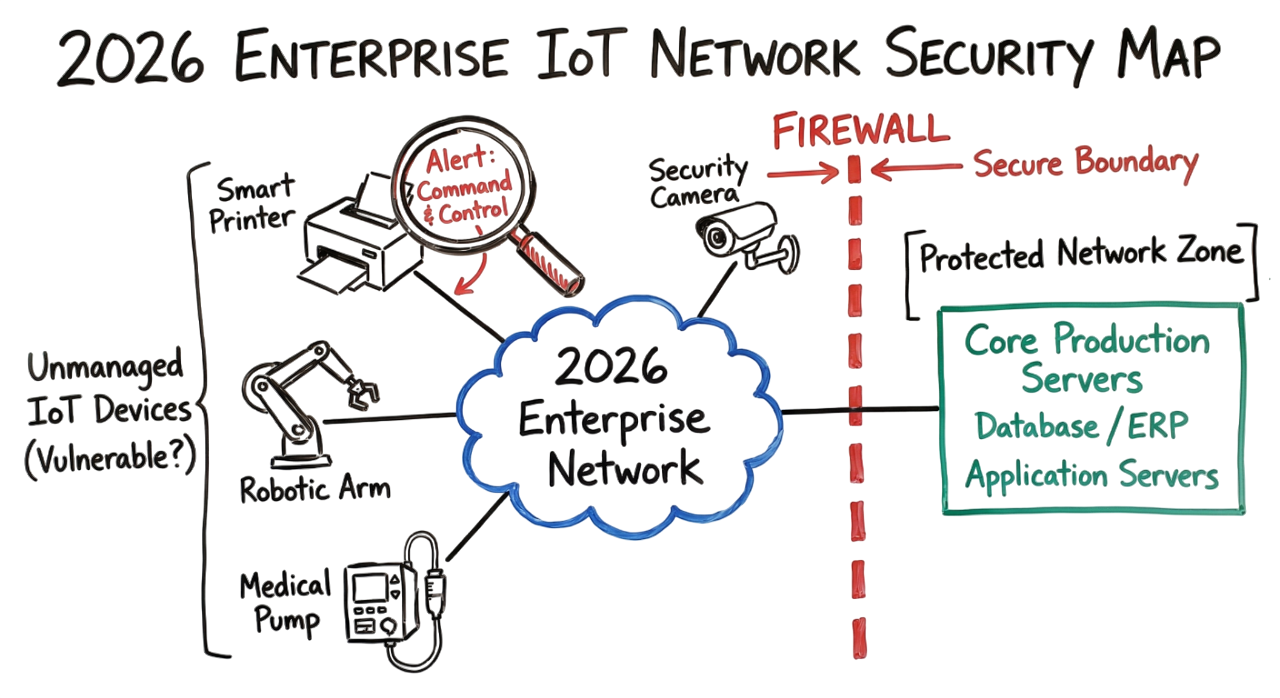
Securing IoT Devices in Enterprise Networks 2026 is no longer optional. Last Tuesday, I was checking a Microsoft Defender for IoT dashboard when a high-severity alert appeared. A smart printer in the HR department was trying to connect to a known command and control server on port 443. This was not a test. The printer was already part of a botnet.
In 2026, this is how business networks will secure IoT devices.
If you are one of my team’s young engineers, please comprehend this: IoT devices are frequently the network’s weakest link. They are widely used, compact, and typically have insufficient safety by default.

What Is IoT Security in 2026? (Simple Explanation)
The methods and techniques you use to protect connected devices and the networks they use are referred to as IoT security. These devices include thermostats, industrial sensors, smart lighting, and medical infusion pumps.
The risk is far higher now than it was five years ago.Attackers utilize automated techniques to find these devices as soon as they connect to the internet. If a device’s default settings are left in place, it might be hacked in a couple of minutes.
How IoT Devices Work in Enterprise Networks
IoT devices collect data from the environment through sensors. They immediately transmit that information across a network. Some talk directly to the cloud. Others use a gateway to translate their data into something a server can understand.
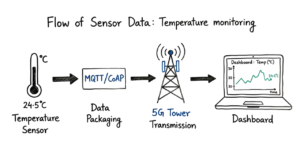
The technical flow follows a specific path:
- The device captures a signal, which might be motion or temperature.
- It packages such data using a protocol such as CoAP or MQTT.
- It transmits the data to a processing platform via Bluetooth, 5G, or Wi-Fi.
- On a dashboard, an application or user may view that data.
Key Components
Every IoT setup has four main parts:
- The hardware, such as a camera or smart plug, is known as the physical device.
- Connectivity: The gadget speaks in this manner. It may be a 4G cellular connectivity or a local Zigbee network.
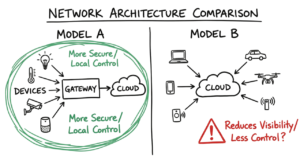
- The Gateway: This acts as a bridge. It manages communication between the devices and the wider network.
- The Cloud Platform: This is where the data lives and where we manage the devices.
Real Example: IoT Security in a Smart Warehouse
Think about a modern warehouse. Containers are moved by 500 autonomous robots. Every robot contains sensors for speed, position, and battery life. Things start to become attractive at this point. A robot can spread malware to other robots over the local network after it has been infected.
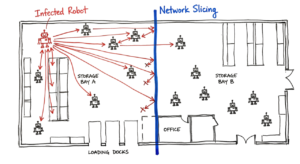
In real environments, it doesn’t work as cleanly as the manuals say. You might have robots running five-year-old firmware because the manufacturer went out of business. For that reason, you cannot rely on the device’s security.
Practical Steps for Securing IoT Devices in Enterprise Networks 2026
This is where most people get confused. You don’t just install antivirus on a smart toaster. You secure it at the network level.
- Start by creating a separate VLAN for all IoT devices.
- Configure a firewall to block this VLAN from talking to your production servers.
- Set rules to allow only specific outbound traffic. If a smart camera only needs to talk to its vendor cloud, block everything else.
- Implement smart device network segmentation to ensure a breach in one area does not reach your domain controller.
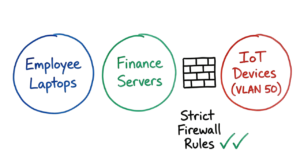
In my experience, if you don’t segment the network, you are basically inviting attackers to move laterally from a coffee machine to your sensitive data.
Advantages and Limitations
Advantages:
- The physical world provides you with facts in real time.
- Climate control and workplace lighting are examples of jobs that may be automated.
- By repairing equipment before it breaks, predictive maintenance reduces costs.
Limitations:
- Many devices have hardcoded passwords that are unchangeable.
- Most IoT devices lack the capacity to perform sophisticated encryption.
- It is a headache to update firmware on thousands of devices.
Common Mistakes
I see these three mistakes all the time:
- Using Default Passwords: The primary approach by which botnets like Mirai propagate is through the use of default passwords.
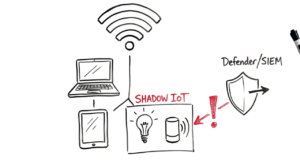
- Lack of Visibility: What you cannot see cannot be protected. Many teams are unaware of the number of smart gadgets connected to their guests’ Wi-Fi.
- Flat Networks: Putting a smart TV on the same subnet as your financial database is a recipe for disaster.
Best Practices for 2026
- Change Default Credentials: Do this before the device even joins the network.
- Implement Zero Trust: To keep IoT traffic away from your sensitive data, use network segmentation.
- Put Zero Trust into Practice: Never put your trust in a gadget just because it’s within your building.
- Track Logs: On your SIEM, keep an examination out for any unusual incoming and outbound traffic patterns.
- Disable Unused Ports: In the options, switch off Telnet and SSH if a device does not require them.

Troubleshooting Scenario
Imagine a smart lock is failing to open via the app. You check the logs in Zscaler and see the traffic is getting dropped. First, look at the DNS logs. Is the device resolving the correct cloud endpoint? If yes, check your firewall policies. I once spent three hours debugging a broken device only to find a new firewall rule was blocking its specific MAC address. Always start with the basics of the OSI model.

Interview Questions
- If a smart gadget doesn’t support agents or antivirus software, how would it be secured?
- Which protocol is the most secure of the several used in the Internet of Things?
- Describe how a botnet of cameras may be used to initiate a DDoS assault.
- What function does an IoT gateway serve in a secure architecture?
- How do IoT devices fit into the “Least Privilege” concept?
Future Trends (2026)
AI-driven autonomous defense is becoming more prevalent in 2026. These systems automatically separate devices that exhibit unusual behavior. Additionally, the European Cyber Resilience Act is compelling manufacturers to offer lengthier security update support cycles. As a result, there will be fewer orphaned devices in our surroundings.

FAQ
Can my IoT devices use a VPN? True. To encrypt all traffic coming from your IoT devices, you can configure a VPN at the gateway level.
Is 5G more secure for IoT than Wi-Fi? 5G offers better encryption and network slicing, which makes it easier to isolate device traffic.
If I discover a hacked device, what should I do? Disable the device’s switch port or block its MAC address to isolate it right away. Next, update the firmware and do a factory reset.
Do all IoT devices need the internet? No. Many devices can function on a local network without ever touching the public web. This is a great way to improve security.
What is a “Shadow IoT” device? This is a device brought into the office by an employee without IT knowledge, like a smart photo frame or a personal voice assistant.
Conclusion
Securing IoT devices in enterprise networks 2026 isn’t about one single tool. It is about a layered approach. You need to know what is on your network, keep it isolated, and watch your logs like a hawk. The most important thing I’ve learnt in my five years as an engineer is to believe that every IoT device is already compromised. You will be plenty safer if you develop your network with this approach. Continue to study, be curious, and keep up strict VLANs.
Learn more about IoT basics: iot.technaga.com
For more practical cybersecurity guides and real-world scenarios, visit Technaga.