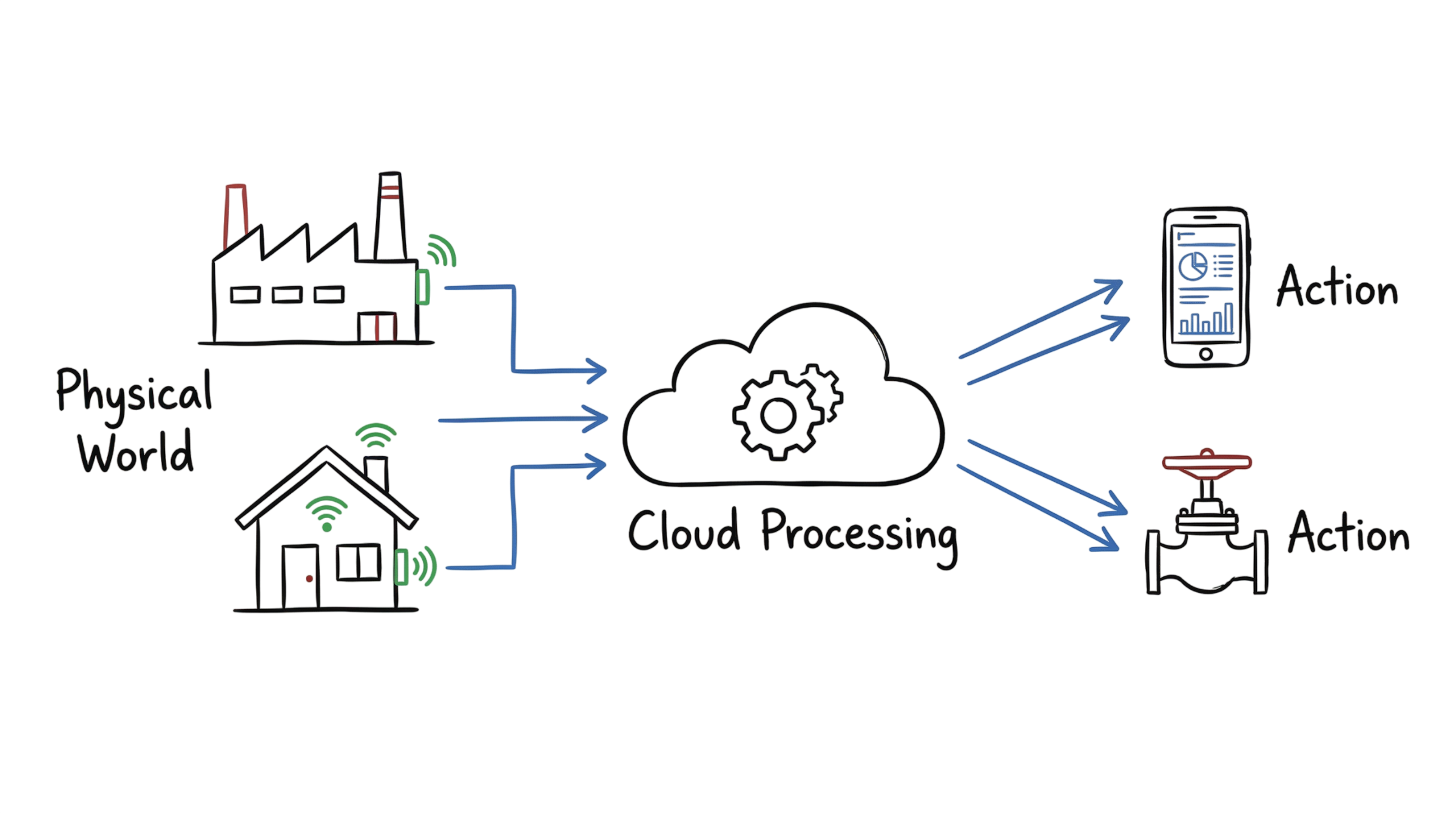
How IoT works is important to understand as over 40 billion IoT devices are expected to be in use worldwide by 2033. Even if you are unaware of it, the Internet of Things has a significant impact on your life. Whether it is your smartwatch or a thermostat you control from your phone, IoT is already part of your daily routine. In this guide, you will learn how data is collected, transmitted, and processed in an IoT system.
What Is the Internet of Things?
The Internet of Things refers to the interconnection of physical devices that are capable of sharing data without human intervention. These smart devices communicate with other systems through the internet using embedded software and sensors. The Internet of Things operates autonomously because you do not have to activate any device manually to make it interact with another device.
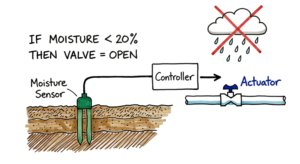
Consider the concept of an irrigation system for a big park. The system cannot work according to a schedule. Rather, moisture sensors inside the soil determine whether the soil is moist. If not, water will be released to irrigate the park. In case of rain, no water is distributed. This kind of autonomy represents the very essence of the Internet of Things. It brings passive objects to life.
How Does IoT Work?
The process follows a specific, logical path. Every system relies on four distinct stages to function correctly.
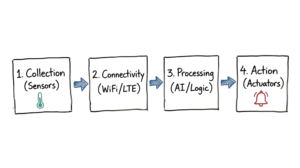
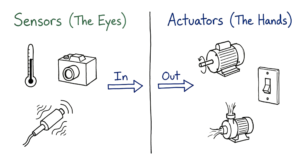
- Data Collection: The Internet of Things devices sense changes in the environment like heat, light, or movement. These analog inputs get converted into digital data.
- Connectivity: Data is sent to the cloud or the server through various communication channels including WiFi, Bluetooth, or cellular networks.
- Data Processing: A computer interprets the incoming data. This involves asking questions like “Is the temperature greater than 30 degrees?” to using AI algorithms for recognizing patterns.
- Action or Insights: The system takes action in response to the analysis conducted by computers. It could be a simple notification on your smartphone or operating actuators.
In real environments, it doesn’t work this cleanly. You often deal with packet loss, high latency, or intermittent signals. I’ve spent long nights debugging why a sensor was dropping its connection every time a heavy machine started nearby. This is where most people get confused. They assume the sensor is broken when the issue is actually radio frequency interference.
Real-World Example: Smart Pumping Systems
Traditional industrial pumps usually run at a fixed speed regardless of demand. This often leads to wasted energy and equipment wear. How IoT works in this industry is through smart pumps that adapt to their environment.
For instance, there are companies like Grundfos which make use of Internet of Things enabled pumps for water treatment plants. Internet of Things enabled pumps feature built-in sensors to detect flow and pressure. When low pressure suction is detected, then the pump slows down to minimize any chance of damaging the machinery. This helps save energy and thus costs. Here is an interesting case study: one of our customers deployed Palo Alto next-gen firewalls along with Zscaler ZIA services. With split-tunneling enabled, they were making DNS requests to the pump gateway outside the tunnel.
Real-World Scenario: The Predictive Maintenance Engineer
Imagine you are a plant engineer at a large factory. You place vibration sensors on a critical motor that powers the entire assembly line. These connected devices send data to a dashboard every minute. One Tuesday, the system detects a tiny, unusual frequency shift that a human could never hear.
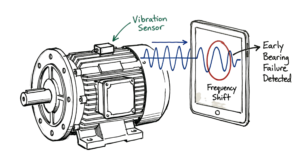
The program then looks at the information in relation to past data and recognizes that there is an ongoing bearing failure. An important notification is then sent out to you on your tablet. You then arrange for maintenance when you are taking a break and avoid an unexpected shutdown which would have resulted in a loss of $50,000 for the company.
Common Risks and Challenges
Building a network of billions of devices creates several hurdles. You must consider these risks when deploying any system.
- Password Weaknesses: Many devices are provided with admin or 1234 as preset passwords, which hackers can easily crack.
- Data Interception: In case the data travels unencrypted over the internet, it will be open to interception and exploitation.
- Inability to Update: Some companies make it difficult to update software and fix security flaws after the device has been sold.
- Vulnerability to Physical Attack: Publicly accessible devices are at risk of being tampered with or stolen.
- Privacy Issues: The continuous monitoring of data collection could result in the profiling and tracking of your activities.
- Interoperability Problems: Each brand uses different standards, thus hindering the compatibility of devices.

How to Improve IoT Security (Practical Steps)
You can protect your network by following established best practices. Security is not a one-time task but a continuous cycle.
- Change the Default Credentials: Make sure to configure different strong passwords for all new devices added to the network. I had to deal with one case when using default credentials on an intelligent camera was used by a botnet to move into the production environment.
- Encrypt Communication: Select methods that can enable you to use TLS when sending communication messages.
- Network Segmentation: Place your smart devices on their own Wi-Fi network apart from your computers and servers.
- Firmware Updates: Once any new update is provided by the manufacturer for your device, install it immediately.
- Disable Unused Features: If there is no necessity for you to use such features as remote management, disable them.
- Multi-Factor Authentication: Protect your applications used to manage your devices.
Tools and Technologies
To understand how IoT works, you should know the specific tools that power the industry. These range from hardware to cloud platforms.
| Tool Name | What It Does | Use Case |
| MQTT | A lightweight messaging protocol for low bandwidth networks. | Sending sensor data from remote sites. |
| Arduino | An open source hardware platform for building prototypes. | Creating custom temperature or motion sensors. |
| AWS IoT Core | A cloud service that connects and manages devices at scale. | Managing thousands of smart meters in a city. |
| LoRaWAN | A long range, low power wireless protocol. | Tracking agricultural data across miles of farmland. |
| Matter | A new smart home standard for interoperability. | Making Google and Apple home devices work together. |
Frequently Asked Questions (FAQs)
Q1: What distinguishes a sensor from an actuator?
A: A sensor detects information in its surroundings such as temperature measurement while an actuator carries out an action such as turning on a fan when the temperature goes beyond the permissible level.
Q2: Does IoT demand constant internet connectivity?
A: No. IoT relies on edge computing that enables processing the collected data at the local level. This kind of system only connects to the internet when necessary in order to exchange data.
Q3: Is 5G technology crucial for the Internet of Things?
A: Though not crucial, 5G enhances IoT’s ability to provide services as it increases the number of devices that can connect to one another within a limited space and decreases latency.
Q4: How do I make sure that a gadget is secure enough?
A: You should purchase products that comply with the NIST core baseline and ask about the company’s policy concerning software updates in the future.
Q5: Is it possible to develop an IoT solution myself?
A: Definitely yes. You can start with easy-to-learn kits such as Arduino or Raspberry Pi that teach you how to code hardware solutions.
Conclusion
Understanding IoT requires an understanding of the entire lifecycle of IoT. Firstly, IoT involves collecting unprocessed data from the physical world using IoT-enabled devices. Secondly, this data will then be conveyed to the processing unit via a secure communication link. Finally, there will be action or insight based on that data.
Important considerations involve the need to use hierarchical architecture thinking, the need for real-time data exchange, and cybersecurity. As we move towards 2026 with the advancement of IoT, such networks will become intelligent with the aid of edge computing and AI. You are capable of utilizing the interconnectivity to make smarter decisions.
Reference: wikipedia
👉 If you want to learn more, read our guide on IoT Security Best Practices at IOT Technaga
👉 You can also explore our cloud security blogs at Technaga