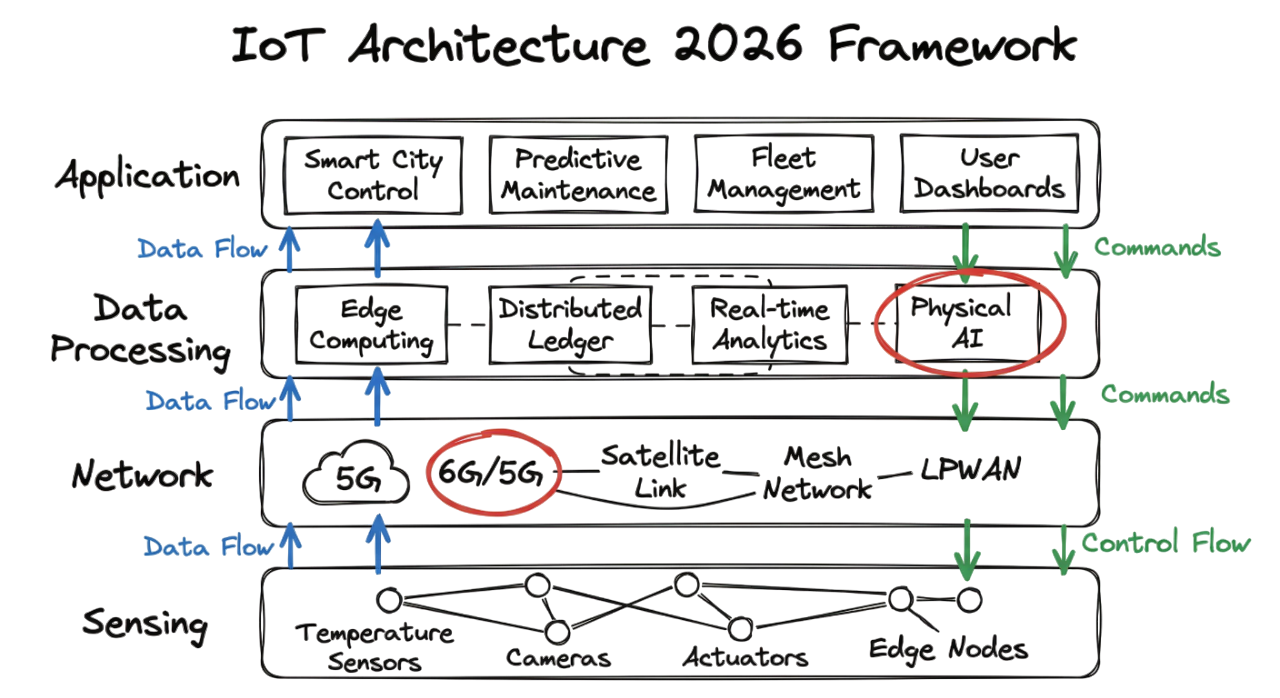
Suppose you are employed at the Security Operation Center during the night shift. 3:00 AM is here. Your SIEM dashboard suddenly illuminates. From the subnet you believed to be isolated, you see an odd increase in outgoing traffic. You check the logs. A smart thermometer in the server room is trying to reach a known malicious IP address over port 23. This is exactly how most security incidents begin. You cannot protect these devices if you do not understand this iot architecture 2026 guide and how it governs data movement.
Understanding the IoT Architecture 2026 Guide
A network of Materials with software and sensors is referred to as the Internet of Things. Such devices use a network to send and receive data. The definition has grown by 2026. The Internet of Everything is the topic of our current discussion. This encompasses individuals, procedures, information, and objects. Together, these elements enable the conversion of physical impulses into digital actions.
How Data Moves in the Real World
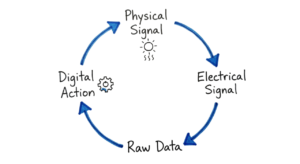
IoT works by creating a loop between the physical world and the digital world. A sensor detects a change in the environment. This could be temperature, motion, or light. The device converts this physical change into an electrical signal. This signal becomes raw data. The device then sends this data across a network for analysis.
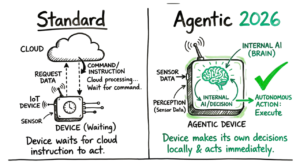
Now here’s where it gets interesting. In 2026, devices do not just report data. We now use Agentic IoT. This means devices use local AI to reason and act on their own. They do not always wait for a command from a central server. This shift makes the network harder to monitor because the “brain” is often at the edge.
How IoT Data Flow Steps Move Through Your Network
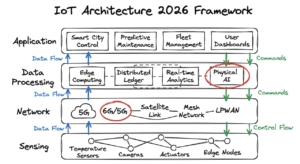
Most modern systems use a four layer model. This structure ensures the system is stable and secure.
- Sensing Layer: This is the hardware. It includes sensors and actuators. Sensors collect data. Actuators perform physical tasks like opening a valve.
- Network Layer: This layer moves the data. It uses 5G, Wi-Fi, or satellite links. In 2026, many industrial sites will use 6G experimental nodes for ultra low latency.
- Data Processing Layer: Computers analyze the data here. This often happens at the edge. Edge computing processes data near the source to save bandwidth.
- Application Layer: This is the user interface. It includes dashboards and mobile apps where you see the final results.
Industrial IoT Components You Need to Know
Every system requires these core pieces to function:
- Sensors: These act as the system’s eyes and ears. Infrared sensors for heat and ultrasonic sensors for distance are two examples.
- Gateways: A gateway operates as a connection. It gathers data from several sensors and sends it to the cloud. It also provides an additional degree of security by filtering conversations.
- Connectivity Protocols: These are the languages that gadgets use. Typical ones include CoAP for devices that are limited and MQTT for lightweight messaging.
- Cloud Platforms: These offer the large processing power and storage required for big data.
Real World Example: Smart Agriculture
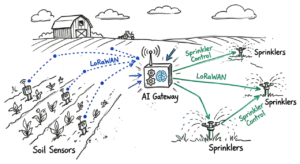
In 2026, imagine a massive farm. Moisture and nutrient levels are measured by hundreds of soil sensors. These sensors transmit data to a central gateway located miles away via LoRaWAN. An AI model receives the data from the gateway. This model determines the exact amount of water needed for each plant. It then sends a command to smart sprinklers to start. This system saves water and increases crop yields without any manual input.
Practical Implementation: Building Secure Flows
An enterprise system must be placed up according to a rigorous procedure. This guarantees that you don’t provide attackers access to backdoors.
- Device Enrollment: Before every device connects to your network, it must be given a distinct digital identity.
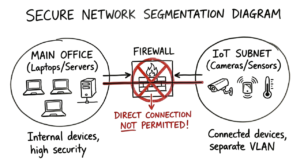
- Network Segmentation: You then configure the network. This involves setting up VLANs to keep IoT traffic separate from your main office network.
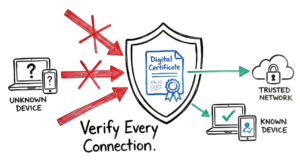
- Authentication Setup: This is where most people get confused. They think a single Wi-Fi password is enough. You need certificate based authentication to keep the network safe.
- Traffic Baseline: Once connected, monitor the data for one week. This creates a baseline so you know what “normal” looks like
Advantages and Limitations
The Pros: You might see your operations in real time. Automation lowers expenses and human error. With predictive maintenance, you may anticipate when a machine will malfunction.
The Cons: For manufacturers, security is frequently an afterthought. Integrating new cloud technologies with legacy systems is challenging. Low bandwidth can cause poorly built networks to fail due to high data volumes.
Common Mistakes and Best Practices
I have seen many engineers make the same errors. One major mistake is leaving default credentials on devices. Hackers use automated bots to find these devices in minutes. Another mistake is ignoring the physical security of the gateway. If an attacker can plug a cable into your gateway, your software encryption will not matter.
You should always use Zero Trust principles. Do not trust a device just because it is on your network. Verify every connection. Additionally, you should maintain a current Software Bill of Materials for your devices. When a new vulnerability is discovered, this lets you identify which devices are susceptible.
Troubleshooting Scenario: The Ghost Device
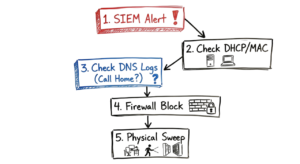
You are informed that a new device has connected to the network, but you are unable to discover it. You are confused with the MAC address seen in the DHCP data. When you try to ping the device, it doesn’t react. Check your DNS logs in this case. Unauthorized devices frequently attempt to contact a command and control server. After blocking the MAC address with your firewall, physically sweep the region.
IoT Security Interview Questions
- What is the difference between MQTT and HTTP in an IoT context?
- How does edge computing improve the security of a sensor network?
- What are the primary security risks of the Matter protocol?
- How would you implement a Zero Trust model for unmanaged sensors?
- What is the role of an IoT gateway in data normalization?
- Explain how a Mirai style botnet spreads through connected devices.
Future Trends (2026)
The biggest trend is the rise of Ambient IoT. These are battery free devices that harvest energy from the air. They use radio waves or light to power themselves. We are also seeing the integration of 6G. This allows for millions of devices to connect in a single square kilometer. Finally, Physical AI is becoming standard. This enables robots to securely carry out difficult jobs and get a greater understanding of their physical environment.

FAQ
Can I connect my IoT devices to a standard VPN? A: You can, but it’s frequently ineffective. The majority of sensors lack the computational capacity to manage complex VPN encryption. Instead, use hardware-based security modules or lightweight protocols like WireGuard.
Q: For IoT, is 5G superior to Wi-Fi? A: It depends on your demands. Outdoor spaces and moving cars are more suited for 5G. For indoor workplace settings, Wi-Fi 6 or 7 is frequently preferable.
Q: What is a digital twin? A: A digital map of a real thing is what it is. A live model that may be used for testing and simulation is made using the sensor data.
Q: How do I secure a device that does not support updates? A: Place it behind a secure gateway. Use the gateway to monitor and restrict its traffic so it can only talk to specific authorized servers.
Q: Does IoT data always go to the cloud? A: No. With edge computing, much of the data stays on the local network. Only summarized or important data goes to the cloud.
Conclusion:
The first step in safeguarding these systems is to comprehend their architecture. You have to observe the data flow instead of just the hardware. You may stay ahead of the risks by concentrating on the gateway, utilizing Zero Trust, and keeping an eye on your logs. Keep your eyes on the traffic and your configurations tight. In the security environment of 2026, that is the only way to survive. Your road map to a more robust network is this guide to IoT architecture for 2026.
You should always follow proper network security practices when designing IoT environments.
If you want to explore more IoT-related articles, visit our IoT section.