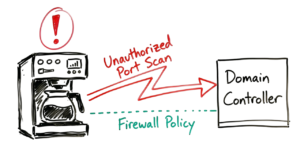
IoT security risks and best practices are not something you learn from theory alone. I remember a ticket that came in last Tuesday at 3:00 AM. Our SOC dashboard flagged a smart coffee machine in the executive breakroom. It was attempting to perform a port scan on our domain controller.
At first, it sounds harmless. A coffee machine doing a scan?
But in a modern enterprise, that device is basically a Linux-based system with a network stack and enough processing power to host a small botnet.
Securing autonomous IoT networks in 2026 is no longer a niche task for specialized teams. It is a daily reality for every security professional. Everything is interconnected. It is a possible point of entry for an attacker if they have a MAC address.
What Are IoT Security Risks and Best Practices
By 2026, the term “Internet of Things” will refer to more than just connection. It may be compared to a vast network of tangible items that connect through sensors and software. We now call this the Internet of Everything or IoE. These devices do not just send data to a central server anymore. They perceive their surroundings, reason about the data, and take action.
Now here is where it gets interesting. We are currently in the era of agentic IoT security and physical AI. This means the things in your network are becoming autonomous agents. A smart thermostat in a data center does not just report a temperature spike. To transfer workloads before the hardware overheats, it hyperlinks with the server load balancer and the cooling system. Without waiting for a person to press a button, it makes these decisions.
How IoT Security Risks and Best Practices Work in Real Environments
The basic flow is simple. You can follow the data through these steps:
- A device collects data from the physical world using sensors.
- The device processes that data locally using edge AI.
- The system shares the result or acts on it.
- The management platform logs the event for your review.
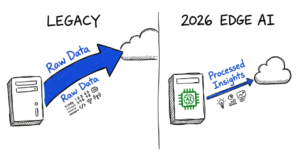
In the past, devices sent every bit of raw data to the cloud. That was slow and expensive. Today, we use edge AI device management. The device has a small AI accelerator chip inside. It analyzes the data locally. It only sends the important bits to your SIEM or your management platform. This minimizes latency and optimizes bandwidth. This is important to comprehend since it affects how you track traffic. There won’t be a continuous flow of unprocessed sensor data. Intermittent bursts of processed data will be visible to you.
Understanding Industrial Internet of Things Architecture for IoT Security Risks and Best Practices
The architecture usually follows a four layer model.
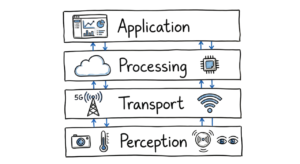
- The Perception Layer: These are the sensors that identify changes in temperature, motion, or the science of chemistry.
- The Transport Layer: The network is this. In 2026, satellite communication, Wi-Fi 7, or 5G Advanced will be used for remote areas.
- The Processing Layer: This is the cloud server or edge gateway in which data is stored and processed.
- The Application Layer: This is the user interface that you view, such as a dashboard in your SOC or a mobile app.
This is where the majority of folks become confused. They consider the gateway to be only a router. It isn’t. Protocol translation is carried out via a contemporary IoT gateway. It transforms outdated industrial protocols, such as Modbus, into more contemporary encrypted communication, such as MQTT over TLS. Your whole array of sensors is blind if the gateway is hacked.
Real-World Example: The Smart Warehouse
Imagine an enterprise scenario in a logistics hub. You have hundreds of autonomous mobile robots. These robots use LiDAR to navigate. They talk to the warehouse management system to know which pallet to pick.
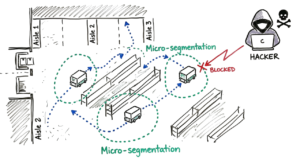
If an attacker gains access to one robot, they could potentially change the navigation coordinates. They could cause physical damage or create a bottleneck that costs the company millions. You are not just protecting data here. You are protecting physical safety.
Practical Steps for IoT Security Risks and Best Practices in Autonomous IoT Networks (2026)
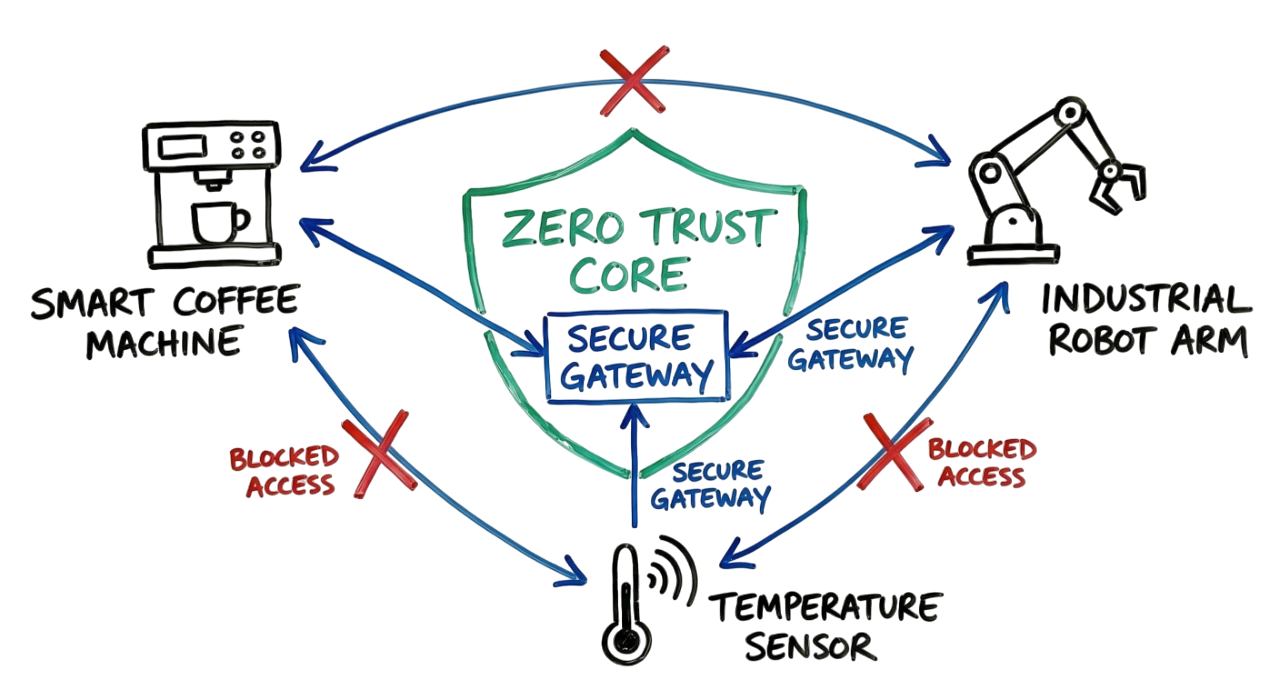
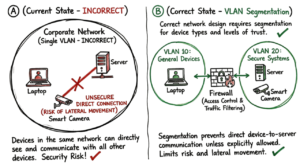
Isolation is the first step in setting up an IoT network. IoT devices should never be connected to the same VLAN as your desktops.
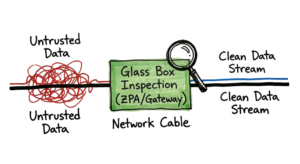
It doesn’t function as neatly in actual settings. A manufacturer will inform you that their gadget must use port 80 to communicate with their cloud. You must be firm. Make use of a zero trust gateway such as Zscaler Private Access. All IoT traffic ought to go via a glass box inspection point. You must observe the precise actions of those encrypted packets.
Advantages and Limitations
The benefits are clear. You get real-time data and lower operational costs. You can predict when a machine will fail before it actually breaks.
The limitations are the headache. Many IoT devices have thin operating systems. They cannot run a heavy security agent. You cannot install CrowdStrike on a smart lightbulb. This means your security must happen at the network level. You are responsible for the perimeter because the device cannot defend itself.
Common Mistakes in IoT Security Risks and Best Practices I See Weekly
I deal with the same errors every week in the field.
- Default Credentials: Engineers leave the admin/admin login active on new sensors.
- Flat Networks: Admins connect devices to the main corporate network instead of a segment.
- No Firmware Updates: Teams install a sensor and forget it exists. Two years later, it runs a version of Linux with ten known critical vulnerabilities.
- Over-privileged Accounts: The device has write access to a database when it only needs to read a single value.
Best Practices for IoT Zero Trust Implementation
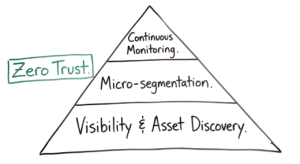
Apply a zero trust strategy to each device. Every sensor should be handled as though it is already compromised.
- Verify Identity: Prior to the device sending a single packet, verify its identification.
- Micro-segmentation: Divide the gadgets into little groupings. The attacker shouldn’t be able to access the other smart cameras if one is compromised.
- Rotate Keys: Avoid using the same API key across all devices. You only lose one device if a single key leaks.
- Monitor Behavior: When a device exhibits unusual behavior, use a SIEM to notify you. You need to be notified right away if a temperature sensor begins delivering 1GB of data to an arbitrary IP.
Troubleshooting Scenario
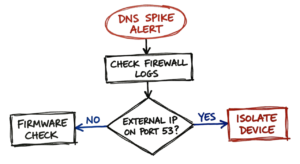
Your network experiences an increase in DNS failures. You look over the logs. A collection of intelligent HVAC controllers is attempting to solve a nonexistent domain.
First, you check the firewall logs. You see they are trying to reach an external IP on port 53 instead of using your internal DNS. This is a sign of hardcoded settings or a potential malware infection. You should isolate those controllers immediately. You then check the manufacturer portal to see if a recent update changed the DNS configuration. Until you can demonstrate otherwise, you must regard it as a breach even though it is frequently a poor firmware update.
Interview Questions to Prepare For
- When a device cannot support a security agent, how can it be secured?
- What distinguishes HTTP from MQTT in the context of the Internet of Things?
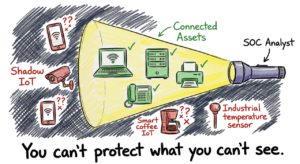
- Describe the dangers of shadow IoT in a business setting.
- What distinguishes an IoT gateway from a typical network router?
- What are your first three actions in the event that an IoT device launches a denial-of-service attack?
- What is micro-segmentation essential for IIoT?
Future Trends for 2026
We are moving toward zero energy IoT. These are sensors that do not need batteries. They harvest energy from ambient radio waves or light. This means you will soon have thousands of tiny, unpowered sensors in your walls and equipment.
We are also seeing the rise of 6G testbeds. 6G will allow for even higher device density. You will eventually manage millions of connections per square kilometer. Security will have to be fully automated because a human cannot manage that many alerts.
FAQ
- What differentiates IoT from IIoT? IoT, like smart watches, is intended for consumers. IIoT is used in sectors such as power plants. Reliability and security standards for IIoT are significantly higher.
- IoT doesn’t need 5G, although it does assist. More devices and reduced latency are made possible by 5G Advanced, which is essential for driverless cars.
- Is it possible to encrypt IoT devices? Yes, TLS is used by the majority for data in transit. The issue is that a lot of low-cost gadgets lack the processing power necessary to accomplish this effectively.
- What is an IoT gateway? It is a bridge. It connects local devices to the internet and often performs data processing and security checks.
- How do I find hidden IoT devices? You should use a network discovery tool or an NDR platform. These tools look for device fingerprints in network traffic.
Conclusion
The hardest part of my job is not the complex exploits. It is the simple fact that you cannot protect what you cannot see. My personal advice for securing autonomous IoT networks in 2026 is to stay curious. Do not trust the vendor documentation. Most of it is too optimistic. Verify every connection and keep your logs clean. You are already ahead of 90% of the business if you can handle the visibility of your items. Continue to learn and maintain your skepticism. In a world where your coffee maker may be a spy, that is the only way to survive.
You can explore more real-world security scenarios on our main platform: www.technaga.com
For a deeper breakdown, I’ve explained IoT network security architecture in detail here: www.iot.technaga.com
If you want advanced implementation strategies used in enterprise environments, check: www.pro.technaga.com